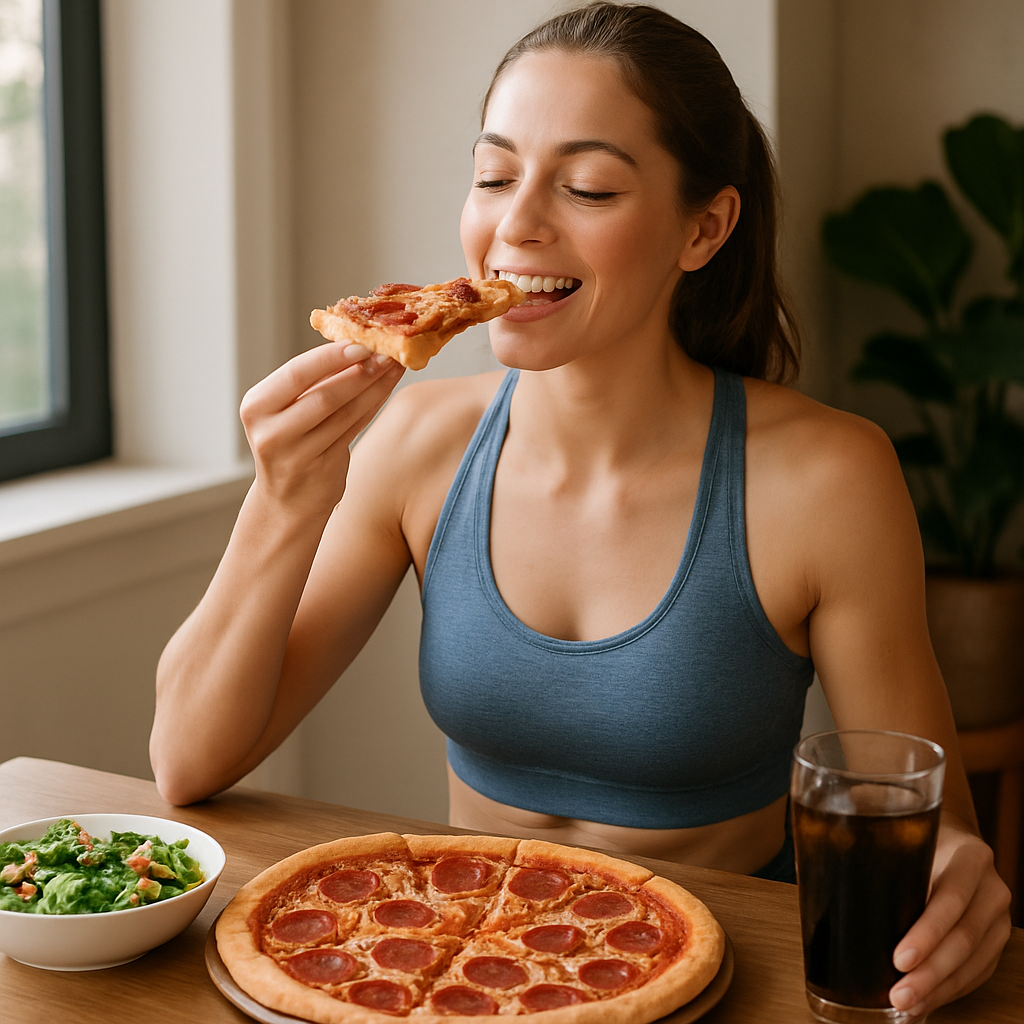
Smart cheat day habits can be the difference between sustainable progress and an all-or-nothing diet spiral. The truth is, a planned indulgence won’t undo your hard work, but a chaotic one might. The goal is to enjoy the food you love while keeping your metabolism, mindset, and motivation intact.
Below are seven research-backed cheat day habits that high performers, dietitians, and long-term losers actually use. Each one is simple, doable, and designed to fit a real life, not a perfect one.
1. Plan the Cheat Before You Crave It
The most powerful of all cheat day habits is scheduling. When you decide in advance what you’ll eat and when, you remove the emotional urgency that drives overeating. Pick a day, pick the meal, and put it on the calendar.
This habit also taps into anticipation, which research links to higher satisfaction and reduced binge risk[^1]. A planned cheat feels like a reward; an impulsive one often feels like a failure.
2. Anchor Your Cheat to a Workout
Pair your indulgence with a training session, ideally a strength workout earlier the same day. Your muscles are more insulin sensitive after lifting, meaning carbs are more likely to refill glycogen than store as fat. A good guide to timing this is found in these pre-workout cheat meals for smart energy boosts.
Even a brisk 45-minute walk before pizza can blunt blood sugar spikes. Movement turns indulgence into fuel.
3. Front-Load Protein and Fiber
Before your cheat meal, eat a protein- and fiber-rich snack like Greek yogurt with berries or a small salad with grilled chicken. This slows digestion and keeps blood sugar steadier when the indulgence hits.
According to Harvard’s nutrition source, fiber improves satiety and glucose response. This single move can cut total calorie intake by 20-30% without effort.
4. Hydrate Strategically Around the Meal
Water is one of the most overlooked cheat day habits. Sip 16-20 ounces of water in the hour before your cheat meal to reduce bloat and prevent the brain from confusing thirst with hunger.
After the meal, keep sipping to support digestion and sodium balance. There’s a smart routine outlined in these pre-cheat meal hydration tips that’s worth bookmarking.
5. Keep the Cheat Window Tight
A cheat meal is not a cheat weekend. The most successful long-term losers contain indulgence to a 1-2 hour window, then return immediately to normal eating. No "since I already blew it" thinking.
This boundary protects your weekly calorie average, which is what actually drives fat loss. One meal at 1,500 calories is forgivable; three days of drift is not.
6. Choose Cheats That Match Your Diet Style
Your cheat should feel like an upgrade to your normal eating, not a betrayal of it. Keto eaters do well with creative dessert swaps, while flexitarians thrive on plant-forward indulgences. Carb cyclers can use these carb cycling cheat meals for smart fat loss to time their indulgences perfectly.
Matching your cheat to your framework keeps cravings low and adherence high. You’ll feel satisfied without straying.
7. Reflect and Reset, Don’t Restrict
After the cheat, skip the guilt and the punishment fasts. Instead, take five minutes to journal: What did I enjoy? What wasn’t worth it? Did I feel satisfied or just stuffed?
This reflection turns each cheat into data. Over months, your cheat day habits get sharper, your cravings get quieter, and your weight keeps trending down. Restriction the next day usually backfires; consistency wins.
Putting These Cheat Day Habits Into Practice
Start with just two of these cheat day habits next week. Maybe planning your meal and front-loading protein. Once those feel automatic, layer in the next two.
The compound effect is real. People who follow these habits for six months typically report fewer cravings, better workout recovery, and steadier weekly weight loss than those who white-knuckle their diets.
Conclusion
Sustainable fat loss isn’t built on perfection; it’s built on smart, repeatable cheat day habits that let you live your life while moving toward your goals. Plan, train, hydrate, contain, match, and reflect. That’s the playbook.
Indulgence isn’t the enemy of progress, it’s part of it when done with intention. Use these cheat day habits as guardrails, not rules, and you’ll find weight loss feels less like deprivation and more like a lifestyle you actually want to keep.
References
[^1]: Cornil, Y., & Chandon, P. (2016). Pleasure as a substitute for size: How multisensory imagery can make people happier with smaller food portions. Journal of Marketing Research, 53(5), 847-864.
- Harvard T.H. Chan School of Public Health. "Fiber." The Nutrition Source. https://www.hsph.harvard.edu/nutritionsource/carbohydrates/fiber/
- Aragon, A. A., & Schoenfeld, B. J. (2013). Nutrient timing revisited: is there a post-exercise anabolic window? Journal of the International Society of Sports Nutrition, 10(1), 5.
- Dulloo, A. G., et al. (2015). How dieting makes the lean fatter: from a perspective of body composition autoregulation. Proceedings of the Nutrition Society, 74(2), 109-118.
