
### Why You Snack More When Food Is Visible: A Glimpse into Behavioral Eating Habits
In the frenetic pace of modern life, snacking has transcended its role as a mere dietary supplement between meals. For many, it functions as an automatic response triggered by environmental factors and food accessibility, rather than genuine hunger. According to the National Health and Nutrition Examination Survey by the CDC, a significant 97% of Americans snack daily, illustrating a widespread behavior. If you’ve ever found yourself mindlessly reaching for a bag of chips merely because it was within sight, you’re not alone. There’s intriguing psychology behind why we tend to snack more when food is visible. Gaining insight into these behavioral patterns can aid in cultivating healthier eating habits and more conscious food choices.
### The Visibility Factor: Out of Sight, Out of Mind
The visibility of food significantly influences our snacking habits. Dr. Brian Wansink, an expert in eating behavior, asserts, “We eat with our eyes first, and just seeing food can make us hungry.” The tendency to indulge in snacks increases when they are easily accessible and visible. This behavior has roots in primitive survival instincts where early humans would consume food when it was available to guard against future scarcity. Although unpredictability in food availability is rare in modern societies, these psychological imprints persist.
A study by Cornell University’s Food and Brand Lab highlights this phenomenon. Participants with candy stored in clear jars were 46% more likely to consume it compared to those who kept candy in opaque containers. This underscores the powerful visual stimulus that prompts eating behavior.
### The Role of Environmental Cues
Environmental cues play a substantial role in shaping our eating habits. The presence of visible food acts as a persistent signal, subtly encouraging us to snack and overriding our body’s natural hunger signals. These cues are prevalent in settings like homes or workplaces, where food is regularly displayed to maximize temptation.
Consider the strategic arrangement in grocery stores and cafeterias. The placement of fresh, vibrant produce or the smell of baked goods often greets you first, appealing directly to the senses. Retailers are acutely aware that visibility and accessibility bolster the likelihood of impulse purchases and increased consumption. Consumer psychologist Dr. Kit Yarrow explains, “Retailers understand the power of visual appeal in prompting impulse buying.”
### Mindless Eating: The Stealthy Saboteur
Mindless eating refers to consuming food without full awareness, often triggered by visual cues. This type of eating lacks a direct connection to actual hunger, driven instead by emotional responses or sheer habit. Mindless snacking is frequently compounded by multitasking, such as watching TV, working at a desk, or engaging in conversation, which diverts attention and diminishes awareness of consumption quantities. The visibility of food during such activities can exacerbate overeating.
### A Strategic Approach to Reducing Visible Snacking
Understanding the influence of visual stimuli can aid in formulating effective strategies to reduce needless snacking. An effective method is to store tempting snacks in opaque containers, placing them in less accessible areas of your kitchen or pantry. Conversely, keeping healthier options visibly accessible can encourage better snack choices. For example, displaying a fruit bowl on the kitchen counter instead of a jar of cookies can influence snacking behavior positively.
Furthermore, practicing mindfulness is crucial. Being consciously aware of your eating habits and influences allows for more intentional choices. Simple practices like eating without distractions and taking time to savor each bite can help reconnect you with your natural hunger cues.
### Conclusion: Empowering Conscious Eating
Grasping why visible food leads to frequent snacking is a vital step towards embracing healthier eating choices. By rearranging our environments and developing awareness of our habits, we can counter the reflexive urge to snack, thereby regaining control over what and when we eat.
Ultimately, this involves redefining our interactions with food, aligning them more closely with genuine hunger signals rather than environmental influences. As you refine your approach to snacking, you’ll better navigate towards improved health and well-being, dismantling patterns dictated by sight rather than actual need. Next time you’re tempted by a visible snack, remember: sometimes, out of sight truly is out of mind, bringing you one step closer to a mindful eating experience.
Related posts
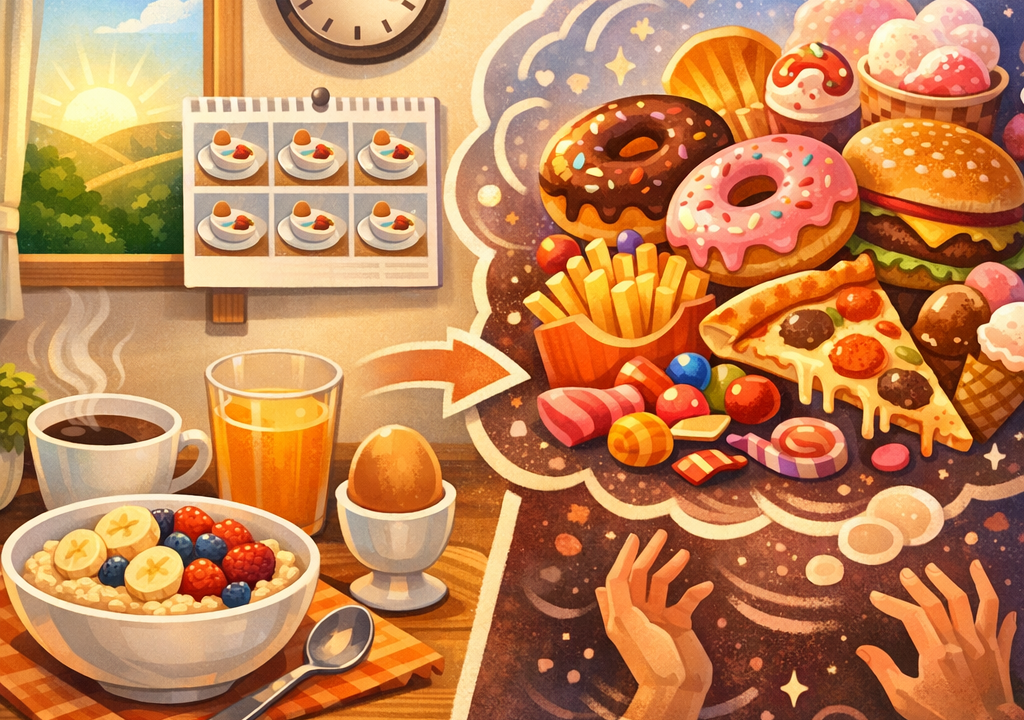
Why Eating the Same Breakfast Can Reduce Daily Cravings
Discover the secret to curbing daily cravings with a simple yet powerful breakfast routine. By eating the same nutritious breakfast every morning, you create a sense of stability and satisfaction that can prevent unnecessary snacking and temptations throughout the day. Transform your mornings and watch your cravings disappear. Ready to give it a try?

The Role of Routine in Reducing Decision Fatigue Around Food
In today’s fast-paced world, decision fatigue is a common hurdle, especially around food choices. Embrace the power of routine to simplify your meals and boost your energy. By automating decisions, you free your mind to focus on what truly matters. Discover how establishing a meal routine can transform your daily life.
