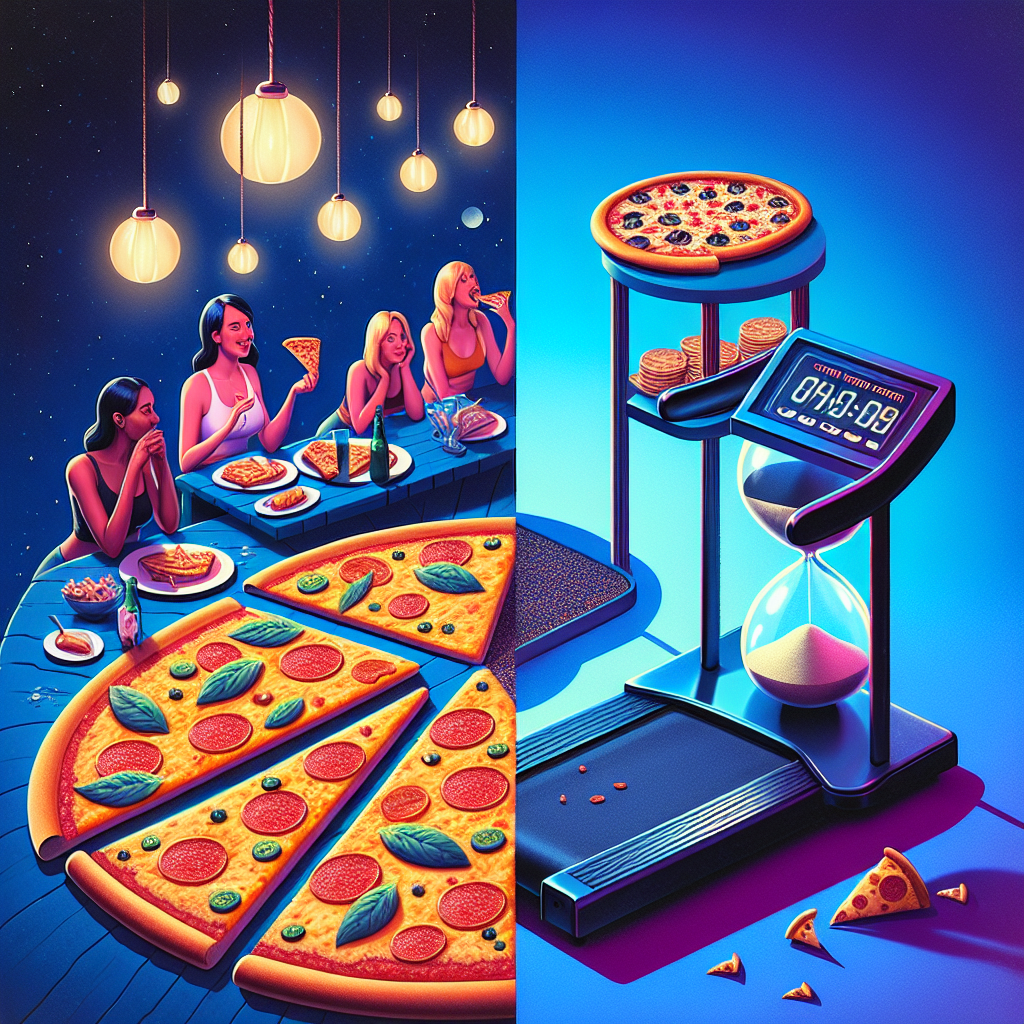
Why Your Saturday Night Pizza Binge Feels Fine — But Derailed Fat Loss by Tuesday Morning
After a disciplined week of workouts, black coffee over sugary lattes, and sticking to your macros, indulging in a cheesy pepperoni pizza and a couple of cocktails on Saturday night can feel completely justified. But then Tuesday arrives—you’re bloated, your jeans feel tighter, and the scale is up.
What gives?
Let’s break down why weekend splurges may be quietly eroding your fat loss progress—and how to start enjoying your weekends without derailing results.
The Calorie Surplus That Wipes Out Your Weekly Deficit
Many believe that being consistent 80% of the time is enough to see results. While that mindset promotes balance, fat loss still relies heavily on being in a consistent calorie deficit.
If your daily fat loss goal is 1800 calories, your weekly target would be 12,600. You might crush your nutrition Monday through Friday, banking 9000 calories successfully. But if your Saturday night cheat meal clocks in at 3000 calories and Sunday brunch hits 2500, you’re not just neutralizing your deficit—you’re overshooting it by nearly 3000 calories.
According to the National Institute of Health, a daily surplus of just 500 calories can result in a pound of fat gained per week. This hidden weekend surplus can quietly stall progress over time.
Expert insight: “A single indulgent meal won’t wreck your results, but frequent splurges will,” says registered dietitian Amy Goodson, MS, RD. “Long-term success comes from your averages, not perfection.”
So, while that late-night pizza may seem harmless, it could be setting you back several days’ worth of hard work.
The Water Weight Spike From Carbs and Salt
That Monday morning bloat? It’s likely not fat, but water retention.
Your body stores several grams of water for every gram of glycogen—your muscle’s carbohydrate storage form. High-carb and high-sodium foods like pizza, fries, and desserts cause your body to retain water.
One slice of pepperoni pizza can have over 600 mg of sodium. Consuming multiple slices, alongside other salty snacks and adult beverages, can trigger a temporary increase in water weight. This results in a puffier appearance and an inflated number on the scale—often mistaken as fat gain.
The good news: water weight is short-term. Hydrating well, focusing on whole foods, and moving your body will typically level things out within a few days.
So before panicking, remember: It’s most likely water—not weight gain.
Your Metabolism and the Insulin Rollercoaster
Weekend overeating, especially excess sugar and carbs, can send your insulin levels into overdrive.
Insulin acts as your body’s energy-storage hormone. After a high-carb meal, insulin spikes, temporarily halting fat burning and promoting energy storage. If you’re already in a calorie surplus, fat storage is even more likely.
“Carb-heavy meals aren’t inherently bad,” explains Dr. Krista Scott-Dixon of Precision Nutrition. “But consistently large amounts teach your body to expect surpluses—which makes efficient fat burning harder.”
Frequent high-carb binge weekends? Your body begins to anticipate and normalize them, making fat loss slower and more difficult.
The Mindset Pitfall of Cheat Meals
When you label a food as “bad,” you set the stage for binge behavior. This all-or-nothing mentality sounds like: “I blew my diet, might as well go all out.” That mentality often results in overeating far past satisfaction, followed by guilt, restriction, and sometimes disordered behaviors.
This cycle—indulgence, guilt, restriction, repeat—can mentally exhaust you and sabotage long-term consistency.
“It’s not the indulgence that’s the issue—it’s the shame spiral after,” says psychologist Dr. Susan Albers. “Practicing mindful eating, where you’re present and unjudging, leads to greater success.”
Instead of calling it a “cheat,” see it as a choice. Framing decisions with intention makes us feel more in control—and less likely to spiral.
How Weekend Foods Affect Your Gut and Delay Recovery
Your gut microbiome flourishes when fueled with fiber-rich vegetables, lean protein, and healthy fats. But suddenly flooding it with greasy fast food, processed snacks, and alcohol? That throws things off.
A disrupted gut can impact more than digestion. It influences weight management, hormone balance, inflammation, and even your mood.
Bloating, cravings, and sluggishness can easily follow you into the workweek—making it challenging to get back into your structured habits. Digestive imbalances may also reduce your metabolism’s efficiency.
If gut challenges or metabolic roadblocks are an issue, you may benefit from targeted supplements or medications. To explore solutions that support fat loss and gut health, visit edrugstore.com.
How to Enjoy Your Weekends Without Wrecking Progress
The great news? You don’t have to sacrifice your social life to stay on track with fat loss.
Smart strategies make all the difference:
✅ Plan ahead: Know you’ll indulge? Strategically lower calorie intake earlier that day or week to account for a 1000-calorie dinner.
✅ Practice portion control: You don’t have to skip the pizza—just aim for satisfaction, not stuffed. Research shows mindful eating reduces binge episodes by up to 74 percent.
✅ Stop the spiral: One indulgent meal doesn’t need to cascade into a binge weekend. Acknowledge it, and gently guide yourself back on track without self-punishment.
✅ Hydrate and move: Water helps flush sodium, while light movement aids digestion and improves overall mood.
✅ Reframe mindset: Food choices aren’t failures—they’re experiences. Learn, reset, and move forward without guilt.
The Bottom Line: Consistency Over Perfection
Fat loss isn’t about getting it right every single day. It’s about how you eat, move, and think most of the time.
If weekend overeating keeps undermining your fat loss results, a few mindset shifts and smarter choices can change the game. You can still enjoy your favorite foods—just do it with awareness and intention.
So yes, have the pizza. But consider how it fits into your bigger goals.
Looking for ongoing fat loss tips and expert support that lets you live your life too? Subscribe to our newsletter today and get weekly motivation straight to your inbox.
Sources
1. National Institutes of Health. “Calorie Calculator.” https://www.niddk.nih.gov
2. Mayo Clinic. “Carbohydrates and Water Retention.” https://www.mayoclinic.org
3. USDA FoodData Central. “Nutritional Content of Pizza.” https://fdc.nal.usda.gov/
4. Harvard Health. “Insulin and Metabolism.” https://www.health.harvard.edu
5. Jackson, M.A. et al., “Gut microbiota and metabolic health.” Cell Metabolism, 2018
6. Kristeller, J.L. et al., “Mindfulness-Based Interventions and Eating Disorders.” Eating Behaviors, 2014
Related posts
Why Eating the Same Breakfast Can Reduce Daily Cravings
Discover the secret to curbing daily cravings with a simple yet powerful breakfast routine. By eating the same nutritious breakfast every morning, you create a sense of stability and satisfaction that can prevent unnecessary snacking and temptations throughout the day. Transform your mornings and watch your cravings disappear. Ready to give it a try?

The Role of Routine in Reducing Decision Fatigue Around Food
In today’s fast-paced world, decision fatigue is a common hurdle, especially around food choices. Embrace the power of routine to simplify your meals and boost your energy. By automating decisions, you free your mind to focus on what truly matters. Discover how establishing a meal routine can transform your daily life.
