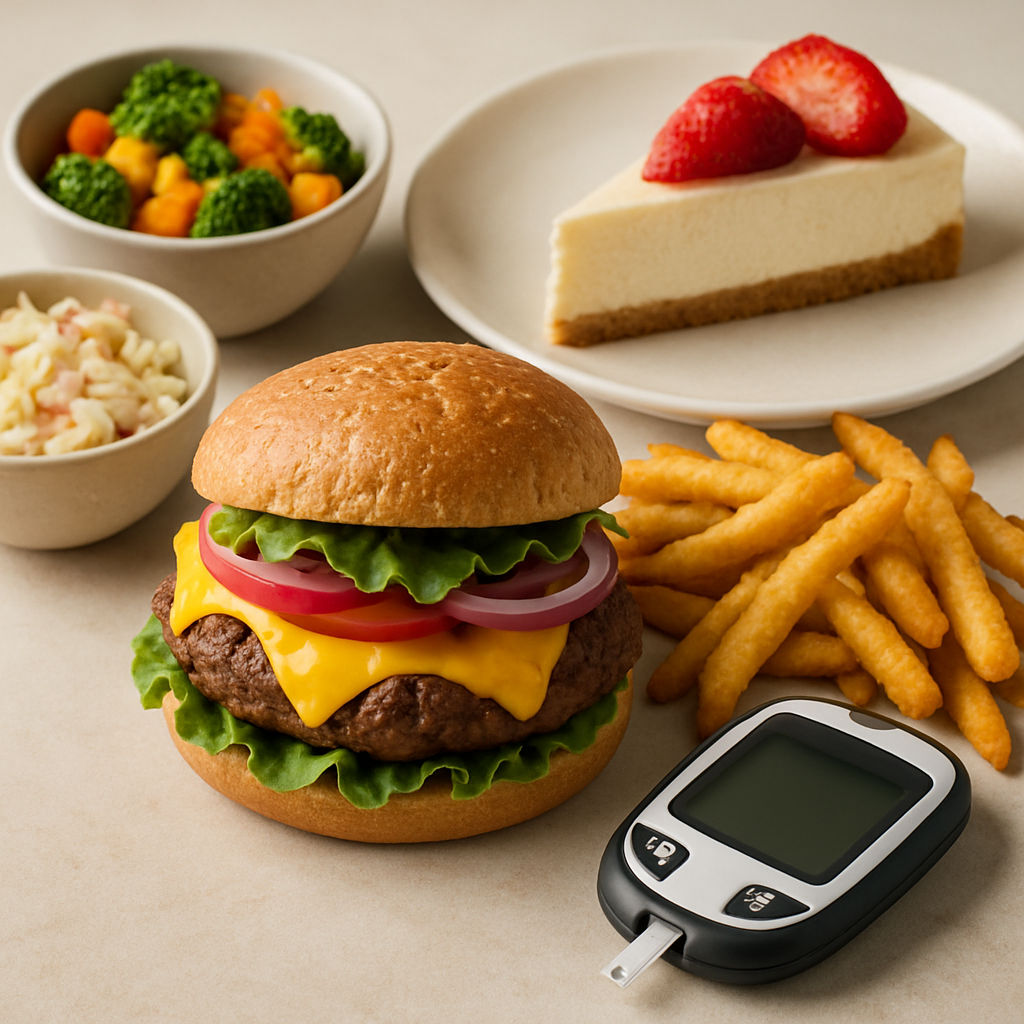
Diabetic-friendly cheat meals aren’t an oxymoron, they’re a smart strategy for staying sane while managing blood sugar. Living with diabetes (Type 1, Type 2, or prediabetes) doesn’t mean saying goodbye to pizza, burgers, or dessert forever.
It just means learning how to indulge with a little more intention. With the right swaps, portion awareness, and timing, you can absolutely enjoy your favorite foods without sending your glucose meter into orbit.
What Makes a Cheat Meal "Diabetic-Friendly"?
A diabetic-friendly cheat meal isn’t about deprivation. It’s about minimizing rapid blood sugar spikes while still scratching that craving itch.
The main culprits behind glucose spikes are refined carbs, sugary drinks, and meals lacking protein, fiber, or fat. When you balance indulgent foods with these stabilizing nutrients, the glucose curve flattens.
According to the American Diabetes Association, pairing carbs with protein and healthy fats helps slow digestion and reduce post-meal spikes. That principle is the foundation of every smart cheat meal.
Smart Swaps That Keep Indulgence on the Menu
Small ingredient swaps can transform a blood sugar bomb into a manageable treat. You still get the flavor, minus the post-meal crash.
Here are some easy upgrades:
- Pizza: Choose a thin, whole-grain or cauliflower crust. Load up on protein toppings like grilled chicken or pepperoni.
- Burgers: Skip the bun or use a lettuce wrap. Add avocado for healthy fat that slows carb absorption.
- Pasta: Try chickpea, lentil, or edamame noodles, they pack 2-3x the protein and fiber of regular pasta.
- Ice cream: Go for slow-churned options or brands sweetened with monk fruit or allulose.
- French fries: Bake sweet potato wedges with olive oil and paprika instead.
You don’t need to overhaul every meal. Just one or two smart swaps can drop the glycemic load significantly.
Timing Your Diabetic-Friendly Cheat Meals
When you eat matters almost as much as what you eat. Glucose response is often better earlier in the day, when insulin sensitivity peaks.
Try scheduling indulgent meals around lunch or early dinner rather than late at night. A late-night cheat meal tends to linger in your bloodstream while you sleep, leading to elevated morning glucose readings.
Pairing a cheat meal with movement also helps. A 15-minute walk after eating can lower post-meal blood sugar by up to 20%, according to research published in Diabetes Care. Even light activity helps your muscles soak up glucose.
Build Your Plate the Right Way
The "plate method" is a simple visual that works wonders, even for indulgent meals. It keeps proportions in check without requiring a food scale.
Aim for roughly:
- ½ plate non-starchy vegetables (salad, roasted broccoli, peppers)
- ¼ plate lean protein (chicken, fish, tofu, beans)
- ¼ plate carbs, this is where your indulgence lives
Want pasta night? Smaller portion of pasta, big side salad, and grilled shrimp on top. Craving tacos? Two tacos with extra veggies and guac instead of four with chips.
This structure lets you enjoy the "fun" food without it dominating your plate.
Desserts That Won’t Wreck Your Numbers
Dessert is often the scariest part of any cheat meal for diabetics. But with the right approach, sweets can absolutely fit in.
Look for desserts featuring dark chocolate (70%+ cacao), berries, nuts, or Greek yogurt. These ingredients add fiber, fat, and protein that buffer sugar absorption.
A few crowd-pleasers worth trying:
- Greek yogurt parfait with berries and crushed walnuts
- Dark chocolate dipped strawberries
- Chia seed pudding made with unsweetened almond milk
- Baked apple with cinnamon and a scoop of nut butter
If you’re baking, swap white flour for almond or coconut flour, and use sweeteners like erythritol, stevia, or allulose. The Mayo Clinic offers solid guidance on sugar substitutes for diabetes if you want to go deeper.
Tracking and Learning From Your Body
Everyone’s glucose response is unique. What spikes your neighbor might be totally fine for you, and vice versa.
If you use a continuous glucose monitor (CGM) or finger-stick meter, treat your cheat meals like little experiments. Note what you ate, when, and how your numbers responded over the next two hours.
Over time, you’ll build a personal playbook of "safe" indulgences. That knowledge is more powerful than any generic diet rule.
Final Thoughts
Diabetic-friendly cheat meals prove that managing blood sugar doesn’t require a lifetime of bland meals and willpower battles. With smart swaps, mindful timing, balanced plates, and a little self-experimentation, indulgence becomes sustainable instead of stressful.
The goal isn’t perfection, it’s a flexible, enjoyable approach you can stick with for life. Go enjoy that pizza. Just make it work with your body, not against it.
—
References & Footnotes
- American Diabetes Association. Food & Nutrition Guidelines. https://diabetes.org/food-nutrition
- Diabetes Care Journal. Post-meal Walking and Glycemic Control. https://diabetesjournals.org/care
- Mayo Clinic. Artificial Sweeteners and Other Sugar Substitutes. https://www.mayoclinic.org/diseases-conditions/diabetes/expert-answers/artificial-sweeteners/faq-20058038
- Centers for Disease Control and Prevention. Diabetes Meal Planning. https://www.cdc.gov/diabetes/managing/eat-well/meal-plan-method.html
