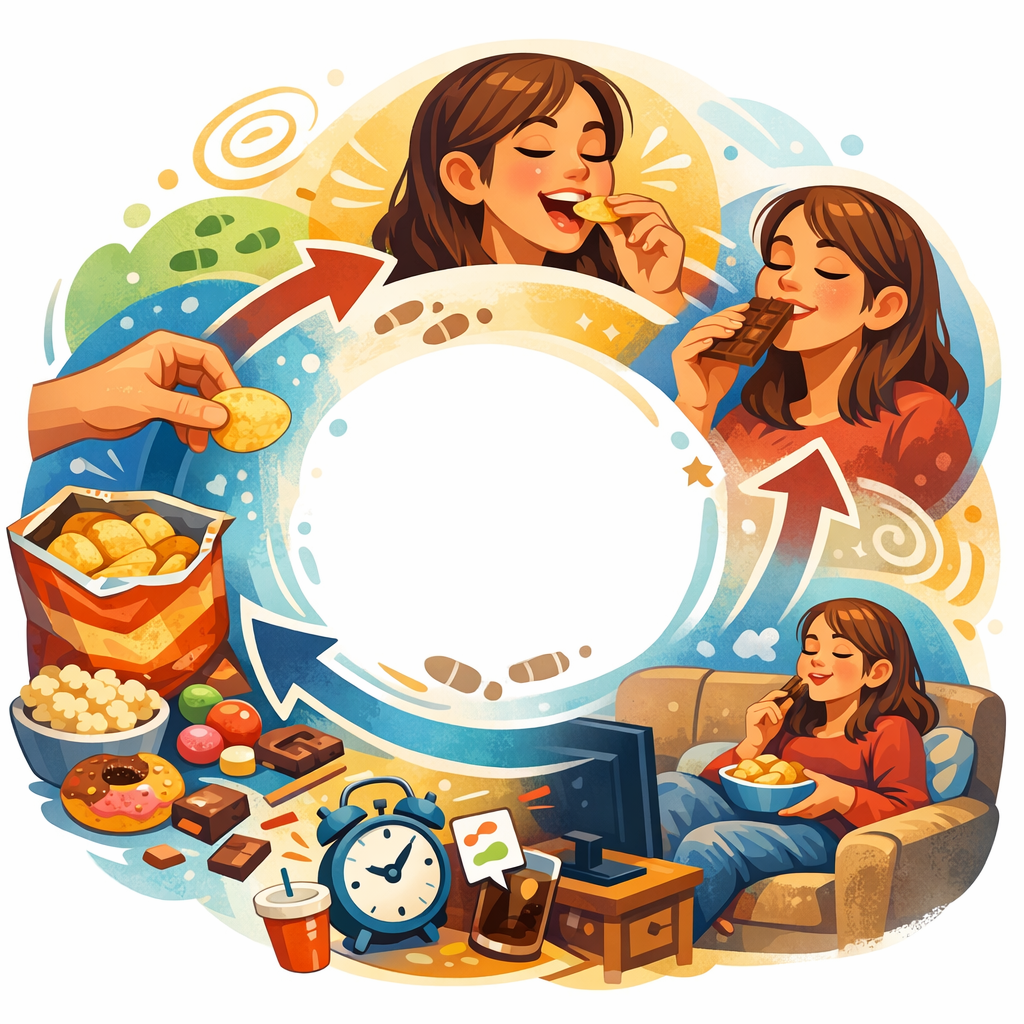
### The Snack Loop: Understanding the Habitual Cycle
In today’s fast-paced world, where convenience often takes precedence over health, falling into a snacking spiral is all too easy. A single nibble can quickly escalate into a habit, disrupting healthy eating patterns and contributing to unintended weight gain. This phenomenon, known as the “snack loop,” affects over 35% of adults in the U.S., according to the Centers for Disease Control and Prevention (CDC, 2021). Understanding how this loop operates is the initial step in breaking free and making more mindful eating choices.
### The Allure of the First Bite
The journey into the snack loop usually starts with just one bite. Many find themselves reaching for a treat during a stressful workday. Dr. Jane Smith, a nutritionist from the National Health Institute, explains, “The appeal of a sugary or salty snack is deeply ingrained in our brain’s reward system.” Snacks high in sugar and fat are specially designed to be enjoyable from the first bite, thanks to the perfect blend of salt, sugar, and fat known as the “bliss point.” For instance, a chocolate bar hitting this bliss point triggers the brain’s reward system, setting the stage for a potential habit.
### Decoding the Snack Loop: Cue, Routine, Reward
To fully comprehend the snack loop, consider its cue-routine-reward system:
1. **Cue:** An internal or external trigger prompts the idea of a snack. This could be hunger, stress, or even boredom—like noticing the 3 p.m. energy slump at work.
2. **Routine:** You respond by reaching for a quick bite, reinforcing a pattern of behavior. Over time, this routine becomes automatic, much like checking your phone for notifications without thinking.
3. **Reward:** The immediate pleasure from the snack creates a positive feedback loop, making it more likely for the behavior to be repeated in the future, thereby reinforcing the habit.
### The Enticing Trap: Why We Get Stuck
The snack loop can feel like quicksand, luring individuals with psychological and physiological drivers. Research shows that high-calorie snacks activate brain areas linked to reward and pleasure. Each indulgence involves dopamine release, reinforcing the habit, notes Dr. Mark Richards, a behavioral psychologist. Mindless eating, such as snacking while watching TV, can lead to overconsumption since the brain may not fully register fullness and satisfaction signals. For example, a small bag of chips can vanish unnoticed when you’re distracted by TV.
### Repercussions of the Snack Loop
Frequent snacking not only leads to unwanted weight gain but also contributes to other health challenges. Continuous grazing disrupts normal hunger cues, resulting in poor dietary choices and an increased risk of obesity, diabetes, and heart disease. According to the American Heart Association, regular unhealthy snacking may increase heart disease risk by 20%. Constant snacking can also deter time and energy from being allocated to preparing balanced meals that supply essential nutrients.
### Breaking Free: Strategies to Overcome the Snack Loop
Transitioning away from the snack loop requires conscious effort. Here are strategies to help:
1. **Increase Awareness:** Pay attention to when and why you snack. Is it genuine hunger or just boredom? Keeping a journal can help.
2. **Set Structured Meal Times:** Establishing a routine with regular meals can reduce impulsive snacking.
3. **Choose Healthy Alternatives:** Instead of chips or candy, opt for snacks high in protein and fiber like nuts or yogurt to keep you full longer.
4. **Mindful Eating Practices:** Be present while eating. Focus on flavors and avoid multitasking. Try savoring a piece of chocolate slowly to experience its full flavor.
5. **Modify Your Environment:** Keep tempting snacks out of sight or replace them with healthier options. A study showed that people who stored fruit on the counter had lower body weights than those who didn’t.
6. **Manage Stress and Boredom:** Engage in activities or stress-relief methods that don’t involve food, such as exercise, reading, or meditation.
### Celebrating Small Wins on the Journey
On the path to breaking the snack loop, celebrate small victories. Habit change is gradual, and acknowledging progress is as important as achieving the end goal. The aim is not to demonize snacks but to foster a healthy relationship with food.
### Final Thoughts
The snack loop is a common challenge but manageable on the journey to healthier eating. By understanding its mechanisms and working actively to change your habits, you can regain control over eating patterns. Through mindfulness and deliberate choices, a single bite can transform from an automatic habit into a conscious decision, promoting a healthier lifestyle. Embrace the journey, enjoy the process, and take it one mindful bite at a time.
Related posts
Unlocking the Weekend Eating Paradox: Why Cheat Meals Can Boost Fat Loss Without Derailing Your Diet
Struggling to stick to your diet over the weekend? Discover the secret to enjoying guilt-free cheat meals while accelerating fat loss! “Unlocking the Weekend Eating Paradox” reveals how strategic indulgences can revitalize your metabolism and amplify results without derailing your progress. Ready to transform your weekends into a powerful weight-loss ally? Dive in now!

Navigating Weekend Overindulgence: How Cheat Meals Impact Progress and Strategies for Sustainable Balance
Struggling with weekend overindulgence? Dive into our latest post, “Navigating Weekend Overindulgence: How Cheat Meals Impact Progress and Strategies for Sustainable Balance.” Discover how cheat meals can be a double-edged sword and learn expert strategies to enjoy indulgences guilt-free, while maintaining your health goals. Unlock the secrets to a balanced lifestyle today!
