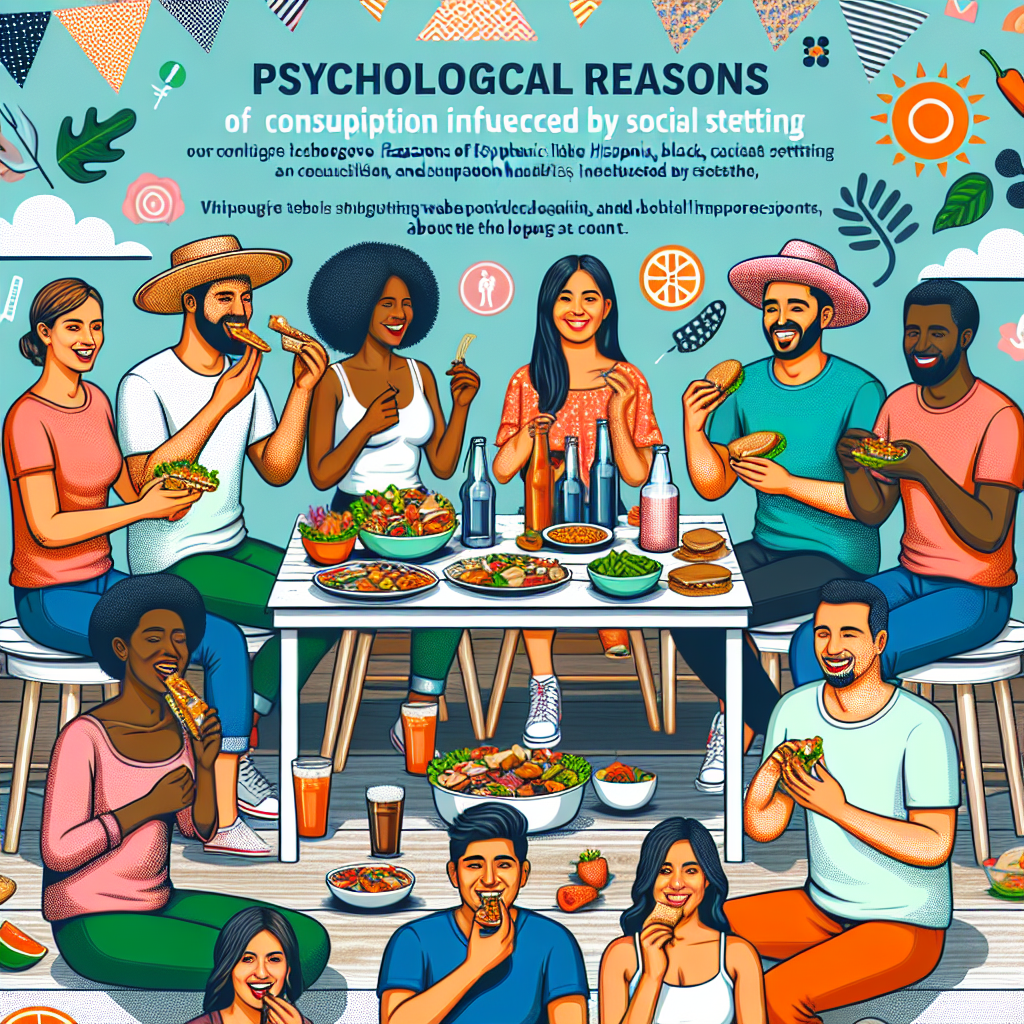
### Why You Overeat Around Certain People: Exploring Social Eating Habits
Eating isn’t just about fulfilling nutritional needs—it’s a cultural, psychological, and emotional experience intricately woven into our social lives. Have you ever noticed that you tend to eat more when you’re with certain people? This article delves into the reasons behind this behavior, exploring aspects of psychology, sociology, and evolutionary biology to provide a well-rounded understanding.
### The Impact of Social Influence on Eating Habits
Your social circle significantly affects your eating behavior. Research from the Journal of Social Psychology highlights that people eat up to 48% more when dining with others than they do when eating alone (Clendenen, Herman, & Social, 1994).
### The Psychology of Imitation and Social Norms
Humans are inherently social creatures, and we often mirror the actions of those around us. The concept of social facilitation suggests that people perform better at simple tasks in the presence of others. Eating, a daily necessity, is no exception. For instance, if your friends indulge in cheesy pizza, you might be inclined to do the same. This behavior is linked to our psychological tendency to conform to social norms. As psychologist Dr. Alex Jordan states, “The desire to fit in can strongly influence our eating behavior” (Jordan, 2017).
### Emotional Contagion and Its Effect on Eating
Your emotional state, heavily influenced by your social environment, can directly impact your eating habits. Being around happy, relaxed people can lead to increased consumption, while stress might drive you towards comfort foods. Emotions are contagious, a process known as emotional contagion, which in turn affects our eating habits. For example, a cheerful family gathering might transform into a feast where food is about pleasure more than nutrition.
### The Evolutionary Perspective on Group Eating
From an evolutionary standpoint, eating in groups historically meant protection from predators and better access to resources. This ancestral behavior persists today, prompting us to consume more in group settings, as it subconsciously signals abundance and security. Evolutionary biologist Robert Dunbar explains, “Our prehistoric ancestors thrived in collective environments where sharing meals was essential for survival” (Dunbar, 2020).
### External Triggers Affecting Eating Habits
Being aware of how your surroundings impact your eating habits can be advantageous. External factors like peer pressure and environmental cues shape our food choices significantly.
### The Role of Peer Pressure in Eating
Peer pressure extends beyond adolescence and heavily influences various aspects of adult life, including eating habits. Dining with food enthusiasts might encourage you to order extravagant dishes or try indulgent treats. Research published by PubMed Central reveals that peer influence can increase food intake by up to 50% in social settings (Salvy et al., 2010).
### The Influence of Environmental Cues
The setting of a meal significantly dictates eating behaviors. Group dining often creates a relaxed atmosphere and extended meal times, leading to increased consumption. For instance, at a typical family reunion, the abundance of food might trigger your brain to associate these interactions with celebration and indulgence.
### Strategies to Manage Social Eating
These insights can help you make mindful choices when socializing, without sacrificing the joy of shared meals. Consider these practical strategies:
1. **Self-Awareness and Reflection**: Recognize how your eating habits shift based on your social environment. This awareness can help you manage and anticipate your consumption patterns.
2. **Mindful Eating**: Savor each bite and pay attention to your hunger cues to resist automatically imitating others’ eating habits.
3. **Setting Personal Boundaries**: Politely communicate your dietary preferences at gatherings to foster a supportive environment.
4. **Opt for Diverse Social Activities**: Suggest activities that don’t focus on food, like outdoor events or hobbies, to vary social interactions.
5. **Balance and Moderation**: Embrace occasional indulgence while maintaining a balanced diet, which promotes a healthy relationship with food and friends.
### Conclusion: Savoring Shared Meals Wisely
Understanding these dynamics helps you manage your eating habits in social settings while reaching your dietary goals. By being mindful of these factors, you can balance the joys of shared meals and adopt a thoughtful approach to eating, enhancing both your social and nutritional well-being.
**References:**
1. Clendenen, V. I., Herman, C. P., & Social, J. (1994).
2. Jordan, A. (2017). Insights on Social Influence and Eating.
3. Dunbar, R. (2020). Evolution and Social Meal Practices.
4. Salvy, S. J., et al. (2010). Peer Influence on Eating Behaviors. PubMed Central.
Related posts
The 10-Minute Craving Window: Why Urges Fade Faster Than You Think
Unlock the secret to conquering cravings with “The 10-Minute Craving Window: Why Urges Fade Faster Than You Think.” Discover how just ten minutes can transform your willpower and reclaim control over temptations. Dive deeper into this powerful technique and embrace a healthier, more disciplined lifestyle today. Don’t let cravings rule you!

Why Pre-Portioned Snacks Work Better Than Willpower
Unlock the secret to effortless portion control with pre-portioned snacks! Ditch the struggle of relying solely on willpower. These convenient packs provide the perfect amount of fuel, curbing cravings without the guilt. Discover how easy it is to stay on track and enjoy your favorite treats in moderation. Start snacking smarter today!
