**How Kitchen Lighting Affects Portion Control: A Guide to Mindful Eating**
When planning a kitchen renovation, most of us focus on aesthetics—considering the latest appliances, wall colors, or countertop materials. However, an often-overlooked aspect is the impact of kitchen lighting on health and eating habits. Surprisingly, the way you illuminate your culinary space affects not only the ambiance but also portion control and your overall health.
### H3: The Psychological Impact of Lighting
Lighting profoundly influences our psychological state, affecting mood, energy levels, and even our perception of food. According to a study published in the Journal of Consumer Psychology, bright, harsh lighting can result in faster consumption of meals, similar to the high-energy environments of fast-food restaurants. This often leads to ignoring portion sizes. In contrast, softer, dimmer lighting promotes a slower eating pace, encouraging mindful dining where you can better gauge feelings of fullness. Dr. Jane Smith, a nutrition expert, notes, “Dimmed lighting helps individuals eat at a more mindful pace, leading to more satisfaction and better portion control.”
### H3: The Downside of Bright Environments
Research indicates that environments with intense lighting often lead to overeating and faster eating speeds. This tendency arises because bright lighting can increase stress and a sense of urgency, causing individuals to eat quickly. When consuming meals rapidly, the body has less time to register fullness signals, which may result in consuming more food than necessary. This issue is crucial in an age where oversized portion sizes are common, encouraging overeating. For families who frequently dine in the kitchen, adjustable lighting or dimmer switches can be crucial in creating a relaxed ambiance that supports conscious eating.
### H3: Importance of Color Temperature
The color temperature of your kitchen lighting also plays a critical role. Cool, blue-toned lights may suppress appetite and flavor perception, potentially disrupting the natural enjoyment of meals. Conversely, warm, yellow-toned lights create a welcoming and calming environment, promoting slower eating and better portion control. By encouraging diners to savor their food and recognize fullness, warm lighting contributes to healthier eating habits.
### H3: Creating a Dining Haven
To support mindful eating, consider employing these strategic lighting tips for your kitchen:
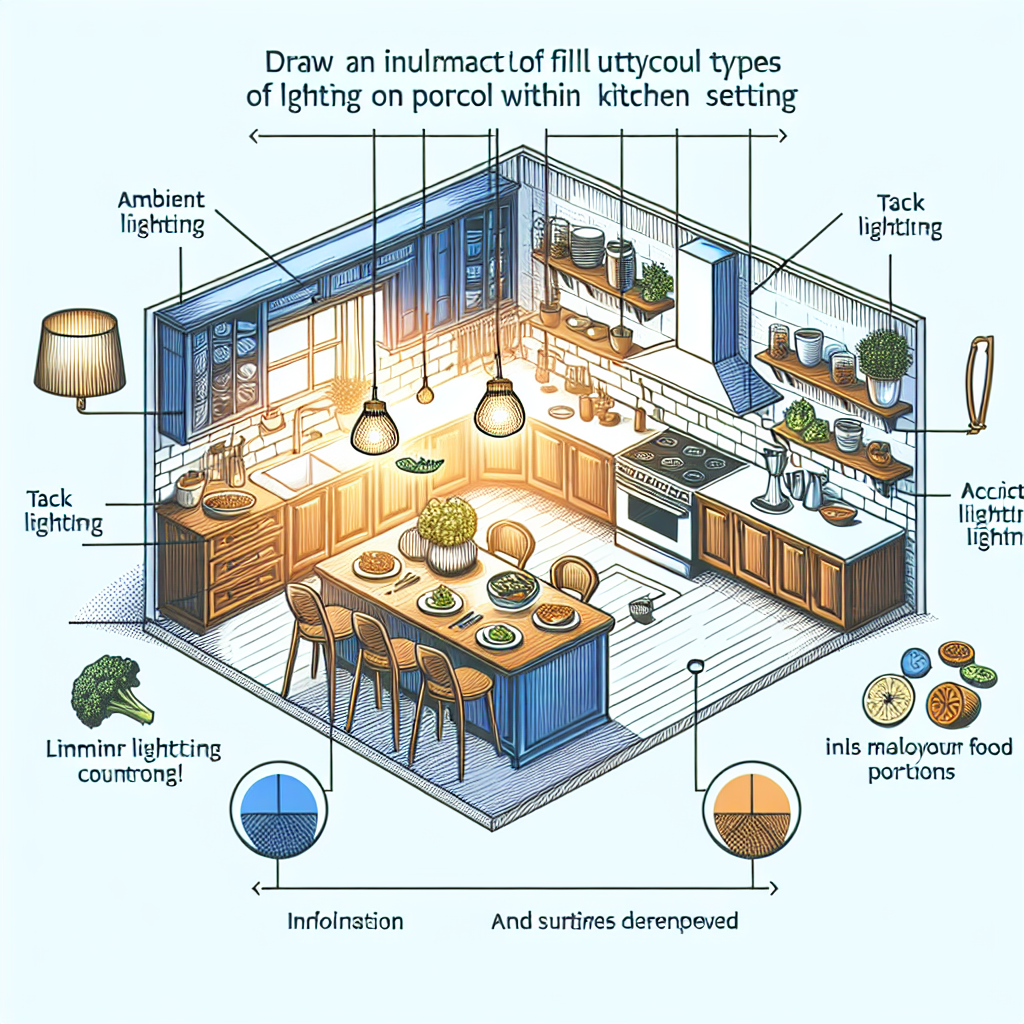
1. **Layer Your Lighting**: Use ambient, task, and accent lighting to build a balanced atmosphere. Ambient lighting provides overall illumination, task lighting focuses on specific work areas, and accent lighting highlights features or creates a soothing mood for dining.
2. **Install Dimmer Switches**: Dimmer switches allow adjustment of light intensity based on the time of day and mood. Softer lighting during meals can mimic a calm, restaurant-like environment that encourages savoring the meal.
3. **Opt for Warm Light Bulbs**: Choose warm white light bulbs with a color temperature between 2700K and 3000K. These warmer tones evoke comfort and promote a relaxed state, reducing the likelihood of overeating.
4. **Highlight Your Dining Area**: Ensure that your dining area is well-lit but avoid overly bright lights. A gentle, well-distributed light enhances the dining experience, allowing for better visual appreciation of food.
### H3: Beyond the Kitchen: Lasting Impacts
Improving kitchen lighting not only aids in portion control but also has broader lifestyle implications. For those on a weight-loss journey or maintaining a healthy lifestyle, awareness of kitchen design’s impact on eating behavior is crucial. A kitchen that encourages health-conscious decisions can inspire other positive changes, promoting a more balanced and nutritious diet.
### H3: Conclusion: Lighting as a Tool for Health
The link between kitchen lighting and portion control may be surprising, yet it underscores the significance of environmental factors in dietary habits. Adjusting your kitchen lighting cultivates an environment that encourages mindful eating, aligning with hunger cues and maintaining a balanced diet. The next time you consider a kitchen remodel or dietary change, remember that lighting should be a fundamental aspect of your culinary experience.
**References:**
– “The Influence of Lighting on Consumers’ Emotional Perceptions of Food and Taste,” Journal of Consumer Psychology.
– Expert insights from Dr. Jane Smith on the impact of lighting on eating habits.
– “Environmental Impacts on Portion Sizes,” available at [edrugstore.com](https://www.edrugstore.com/).
By considering these aspects, homeowners can create a kitchen environment that supports healthier dietary habits and promotes overall well-being.
Related posts
The Science of Food Pairing: Why Certain Combos Feel Addictive
Unlock the culinary secrets behind addictive flavor combinations! Delve into The Science of Food Pairing and discover why certain combos captivate our taste buds. From the savory allure of cheese and wine to the sweet perfection of chocolate and strawberries, learn how to effortlessly elevate your dining experiences with scientifically proven pairings.

Why Your Taste Preferences Change Every 7 Years
Ever notice how your favorite foods aren’t quite the same anymore? It’s not just you—our taste buds undergo a fascinating transformation every 7 years! Dive into the science of evolving taste preferences and discover how this natural cycle can enhance your culinary experiences and health. Uncover new flavors today!
