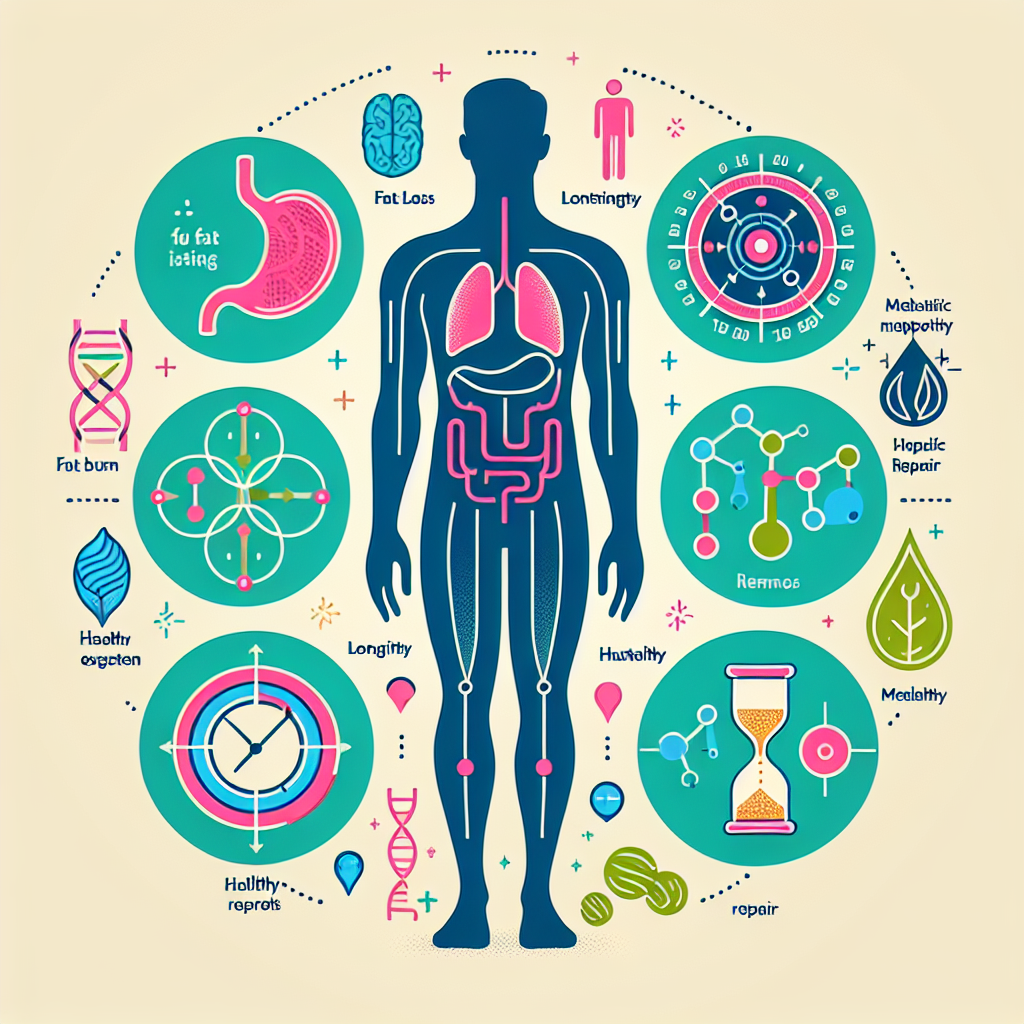
Intermittent Fasting by Goal: Fat Loss vs. Longevity vs. Metabolic Repair
Intermittent fasting (IF) is more than skipping meals—it’s a flexible, science-backed nutrition approach designed for a variety of health goals. While widely recognized for its role in weight management, intermittent fasting also supports cellular longevity and metabolic restoration. To get the most out of IF, it’s essential to tailor your fasting method based on your specific health objective.
What is Intermittent Fasting?
Intermittent fasting isn’t a diet—it’s an eating schedule that alternates between periods of eating and fasting. Common fasting techniques include:
– 16/8 Method: Fast for 16 hours and eat within an 8-hour window
– 5:2 Plan: Eat normally for five days, and limit intake to 500–600 calories on the other two
– Alternate-Day Fasting: Eat normally one day, restrict calories or fast the next
– 24-Hour Fast: Fast for a full day once or twice a week
– Extended Fasts: Fast for 48–72+ hours occasionally under medical guidance
These fasting strategies trigger hormonal and metabolic changes, such as reduced insulin levels and increased production of human growth hormone. Fasting also activates autophagy—a cellular cleanup process that removes damaged cells and supports tissue repair.
According to the National Institute on Aging (2022), time-restricted eating helps regulate the body’s internal clocks and has been connected to longer lifespans in animal models.
Targeted Fasting Approach: Match Your Strategy to Your Goal
Different goals require different fasting methods. Let’s explore three main objectives—and how to align your approach accordingly.
Fat Loss with Intermittent Fasting
If your priority is weight reduction, intermittent fasting can serve as an effective tool. A 2020 JAMA review revealed that time-restricted eating led to improved weight loss and better metabolic health in several randomized clinical studies.
Recommended Strategies:
– 16/8 Method
– Alternate-Day Fasting (ADF)
The 16/8 plan is one of the simplest and most sustainable options. For example, eating from 12:00 p.m. to 8:00 p.m. limits calorie intake and reduces nighttime snacking. Alternate-Day Fasting may enhance results through greater overall caloric restriction during the week.
Example: Finishing your last meal at 8:00 p.m. and waiting until noon the next day to eat creates a 16-hour fasting window. During that time, insulin drops and fat oxidation increases, enabling your body to tap into stored fat.
Tips for Successful Fat Loss Fasting:
– Avoid excessive eating after fasting ends. Consuming too many calories at once can undo benefits.
– Focus on protein intake (1.2–2.0 g/kg of bodyweight) to preserve lean muscle mass.
– Stay well-hydrated, as thirst is commonly mistaken for hunger.
– Combine fasting with strength training for optimal body composition results.
According to Dr. Jason Fung, author of The Obesity Code, “Fasting can be powerful, but it’s not a license to eat poorly during the feeding window.”
Beginner Tip: New to fasting? Start with a 12/12 fast and gradually reduce your eating window each week.
Longevity and Anti-Aging
Intermittent fasting doesn’t just support weight management—it’s also one of the most promising strategies for promoting healthy aging. By reducing inflammation, oxidative stress, and cellular damage, fasting has been shown to activate genes linked to increased lifespan and minimized age-related diseases.
A study published in Cell Metabolism (2019) demonstrated that intermittent fasting triggers longevity mechanisms such as autophagy, telomere preservation, and mitochondrial rejuvenation.
Recommended Strategies:
– 24-Hour Fasting once or twice per week
– 48–72-Hour Periodic Fasts
– Fasting Mimicking Diet (FMD)
Longer fasts allow the body enough time to eliminate damaged cells, regenerate tissues, and rest essential systems. FMD, pioneered by Dr. Valter Longo, offers the benefits of a traditional fast while still allowing for some nutrient intake.
Longevity Improvement Tips:
– Consider FMD meal kits or craft your own with plant-based, low-protein, high-fat, and micronutrient-rich meals.
– After extended fasts, break the fast gently with bone broth or steamed vegetables to avoid digestive shock.
– Avoid chronic calorie restriction, which can reduce metabolic rate and nutrient reserves.
– Prioritize micronutrients like polyphenols, omega-3 fats, and magnesium during refeeding.
Example: A 24-hour fast once weekly (such as from Sunday evening to Monday evening) gives your body a chance to reset inflammatory pathways and support brain and cardiovascular function.
According to Dr. Rhonda Patrick, cellular aging expert, “Autophagy is one of the body’s most essential anti-aging tools—and fasting is the most efficient way to trigger it.”
Metabolic Repair and Insulin Sensitivity
For those struggling with blood sugar instability, prediabetes, or metabolic syndrome, intermittent fasting is a highly effective method of support. The CDC reports that more than one-third of U.S. adults may unknowingly have prediabetes. Improper insulin signaling is a root driver of many chronic health issues.
By reducing meal frequency and cutting out refined carbohydrates, fasting helps stabilize blood sugar, lower insulin levels, and reduce belly fat.
Recommended Strategies:
– Daily 16/8 Fasting (with progression to OMAD—One Meal a Day—if necessary)
– 5:2 Fasting Plan Focused on Whole Foods
Restoring metabolic health requires consistent daily efforts—not occasional fasting. Eating one highly nutritious, low-carbohydrate meal each day has shown to rapidly improve insulin sensitivity.
Tips for Healing Metabolism:
– Eliminate sugar, white flour, and processed foods. Base meals around whole foods like eggs, salmon, avocado, and leafy greens.
– Use tools like continuous glucose monitors (CGMs) or ketone tests to customize your fasting and carb strategy.
– If you’re on medications such as insulin or metformin, consult with your healthcare provider before beginning fasting.
– Incorporate light physical activity—such as walking or yoga—to improve glucose disposal and circulation.
Case Study: A man with high fasting insulin (above 20 μIU/mL) reduced it to a healthy range (around 6 μIU/mL) in just eight weeks using a 16/8 fasting schedule alongside a low-carb, real-food diet.
Looking for ways to support your metabolic health naturally? Visit edrugstore.com for expert-reviewed nutritional resources and supplements customized for insulin sensitivity and metabolic balance.
Choose Your Plan According to Your Health Goals
Every intermittent fasting style serves a unique purpose. Below is a quick reference guide based on your individual goal:
| Goal | Best Fasting Method(s) | Frequency | Primary Focus |
|---|---|---|---|
| Fat Loss | 16/8, Alternate-Day Fasting | Daily or 3–4 times weekly | Caloric control, protein intake, resistance training |
| Longevity | 24–72-Hour Fasts, FMD | Weekly to quarterly | Autophagy, inflammation reduction, nutrient-dense eating |
| Metabolic Repair | 16/8, OMAD, 5:2 | Daily or ongoing | Insulin control, blood sugar stability, whole-food nutrition |
Final Thoughts: Fasting With Intention
Regardless of your health objective—whether it’s weight loss, anti-aging benefits, or improved metabolic health—intermittent fasting can be a transformative tool. But to maximize its power, it must be paired with:
– Whole, unprocessed foods
– Regular physical activity
– Adequate restful sleep
– Mindfulness and consistency
Dr. Mindy Pelz, author of Fast Like a Girl, advises, “Start slow. Listen to your body. Fasting isn’t starvation—it’s structured self-care.”
Interested in taking your health to the next level? Visit edrugstore.com to explore personalized wellness tools, expert health content, and fasting-friendly nutrition products.
Embrace intermittent fasting as a lifestyle—not just a diet—and unlock your full potential for a healthier, longer, and more energized life.
References
1. de Cabo, R., & Mattson, M. P. (2019). Effects of Intermittent Fasting on Health, Aging, and Disease. New England Journal of Medicine, 381(26), 2541–2551.
2. Tinsley, G. M., & La Bounty, P. M. (2015). Effects of intermittent fasting on body composition and clinical health markers in humans. Nutrition Reviews, 73(10), 661–674.
3. Longo, V. D., & Panda, S. (2016). Fasting, circadian rhythms, and time-restricted feeding in healthy lifespan. Cell Metabolism, 23(6), 1048–1059.
4. National Institute on Aging (2022). Time-restricted eating improves health markers in rodents. NIH.gov.
5. Varady, K. A. et al. (2020). Effects of Alternate-Day Fasting on Clinical Outcomes in Adults. JAMA Network Open, 3(2), e201465.
Related posts

Unlocking the Weekend Eating Paradox: Why Cheat Meals Can Boost Fat Loss Without Derailing Your Diet
Struggling to stick to your diet over the weekend? Discover the secret to enjoying guilt-free cheat meals while accelerating fat loss! “Unlocking the Weekend Eating Paradox” reveals how strategic indulgences can revitalize your metabolism and amplify results without derailing your progress. Ready to transform your weekends into a powerful weight-loss ally? Dive in now!

Navigating Weekend Overindulgence: How Cheat Meals Impact Progress and Strategies for Sustainable Balance
Struggling with weekend overindulgence? Dive into our latest post, “Navigating Weekend Overindulgence: How Cheat Meals Impact Progress and Strategies for Sustainable Balance.” Discover how cheat meals can be a double-edged sword and learn expert strategies to enjoy indulgences guilt-free, while maintaining your health goals. Unlock the secrets to a balanced lifestyle today!
