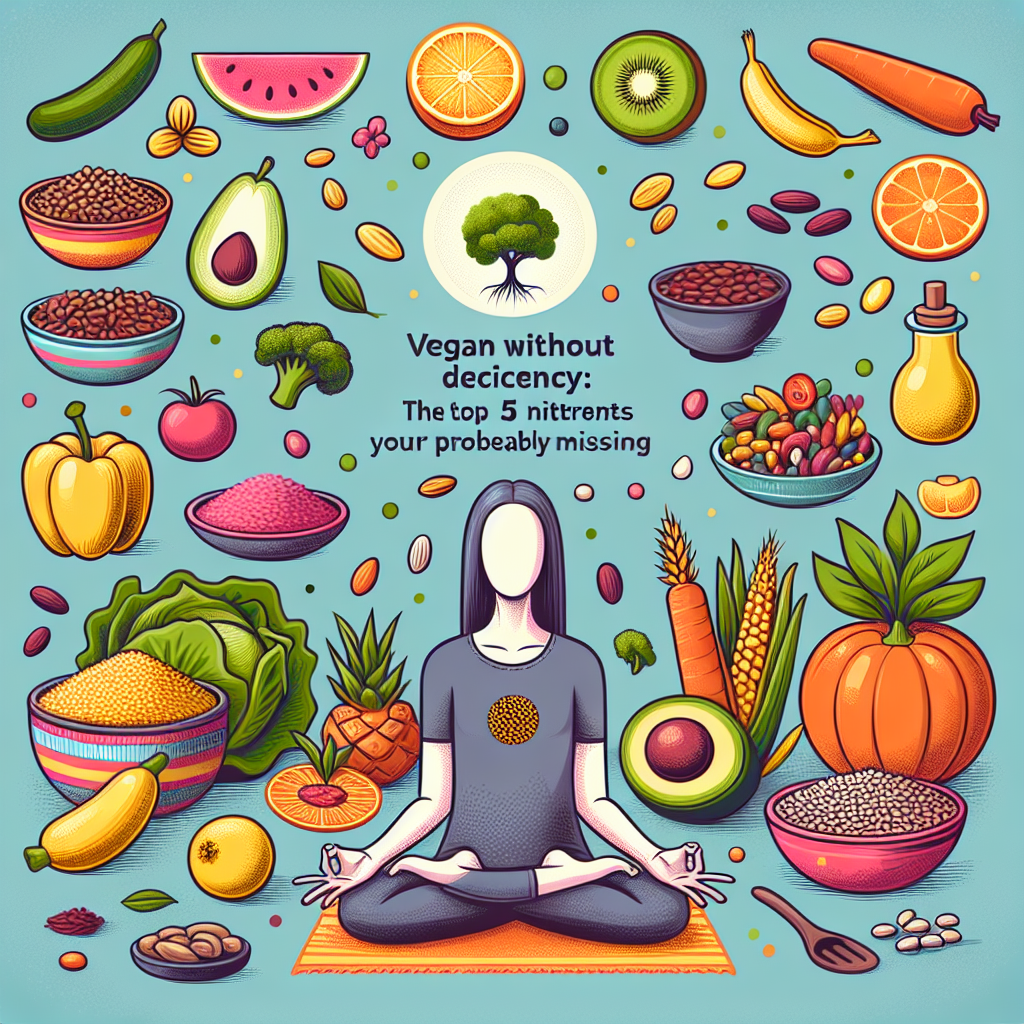
Vegan Without Deficiency: The Top 5 Nutrients You’re Probably Missing
The Rise of Plant-Based Living
Over the last decade, veganism has grown from a niche lifestyle to a globally embraced movement. Whether driven by ethical concerns, environmental awareness, or personal health goals, millions are ditching animal products in favor of plants. In fact, a 2021 report showed that the number of vegans in the U.S. has surged by 300% over the past 15 years.
The Nutrient Challenge of Vegan Diets
While a whole-food, plant-based diet is rich in fiber, antioxidants, and phytonutrients, it can fall short in several key nutrients. As registered dietitian Amy Gorin notes, “A well-planned vegan diet can meet most of your nutritional needs—but some nutrients require extra attention.”
So, going vegan isn’t just about what you remove; it’s also about understanding what you need to add. Here are the top five nutrients that are commonly deficient in vegan diets—and how to make sure you’re getting enough.
1. Vitamin B12 – Essential for Energy and Brain Health
Vitamin B12 is vital for red blood cell formation, DNA synthesis, and nervous system function. Its deficiency can lead to fatigue, memory issues, mood disturbances, and even permanent nerve damage.
Because B12 is found naturally only in animal products, studies suggest up to 92% of vegans could be deficient without supplementation.
Recommended strategies for adequate B12 intake:
– Consume fortified foods such as plant-based milks, cereals, and soy products labeled with vitamin B12.
– Use nutritional yeast that contains B12—it’s great on popcorn, pasta, or in sauces.
– Take a high-quality B12 supplement. Look for cyanocobalamin or methylcobalamin forms.
Most adults need 2.4 mcg daily, but due to absorption challenges, many experts suggest 25–100 mcg daily or 1,000 mcg twice weekly.
Helpful Tip: Persistent fatigue or mental fog? Ask your doctor to test your B12 levels.
2. Iron – Vital for Energy and Oxygen Transport
Iron plays a crucial role in transporting oxygen throughout the body and fueling energy production. However, the form found in plants—non-heme iron—is less efficiently absorbed than the heme iron from animal sources.
Women aged 19–50 require 18 mg of iron daily, a target that can be difficult to hit with plant-based foods alone.
Top vegan iron sources:
– Legumes like lentils, chickpeas, and black beans
– Tofu, tempeh, and edamame
– Dark leafy greens such as kale and spinach
– Pumpkin seeds, quinoa, and fortified grains
Enhance absorption by pairing iron-rich foods with vitamin C (think bell peppers, citrus fruits, or strawberries). Avoid drinking coffee or tea with meals, as these beverages can hinder iron absorption.
If you’re at risk of deficiency or frequently feeling tired, consult a healthcare professional about testing or supplementation.
3. Omega-3 Fatty Acids – Fuel for Brain and Heart Function
Omega-3 fatty acids support brain health, reduce inflammation, and aid in heart function. Plant sources provide ALA (alpha-linolenic acid), but the transformation into the more essential EPA and DHA forms is inefficient—sometimes less than 5% conversion.
Best plant-based omega-3 boosters:
– Chia seeds, flaxseeds, and flax oil
– Walnuts and hemp seeds
To ensure effective DHA and EPA intake, choose algae-based omega-3 supplements—especially formulated for vegans. Algae is the original source of marine omega-3s and offers a sustainable, clean alternative.
Dr. Kelly Springer, RD, emphasizes, “Algae supplements are a direct and efficient way for vegans to get DHA and EPA without fish.”
4. Vitamin D – The Sunshine Vitamin for Immune and Mood Support
Vitamin D is essential not only for bone health but also for a strong immune system, mood balance, and hormone regulation. While nearly half of the U.S. population has low levels, vegans may be especially at risk due to limited access to fortified dairy alternatives or sunlight exposure.
Ways to meet your vitamin D needs:
– Look for fortified foods like plant-based milks, cereals, and juices containing vitamin D2 or vegan D3
– Add UV-exposed mushrooms (check the label for D content)
– Use a vegan-approved vitamin D3 supplement sourced from lichen
Adults typically require 600–800 IU daily, though experts often recommend up to 2,000 IU depending on individual needs. Since vitamin D blood levels can vary greatly, consider getting tested annually through your doctor or a telehealth pharmacy.
5. Zinc – Immune System Defender
Zinc is involved in hundreds of biological processes including immune function, wound healing, and enzyme activity. However, the bioavailability of zinc in plant foods is lower because of phytates—compounds that inhibit mineral absorption.
Reliable vegan zinc sources include:
– Whole grains like brown rice, oats, and quinoa
– Nuts and seeds, especially cashews and pumpkin seeds
– Legumes such as lentils, peas, and black beans
Improve zinc absorption by using food prep techniques like soaking, sprouting, fermenting, or leavening grains and legumes.
Men need 11 mg of zinc daily, while women need 8 mg. Those who are pregnant or breastfeeding require higher amounts. Consider supplements if you suspect a deficiency is affecting your immunity or recovery.
How to Build a Nutrient-Rich Vegan Plate
Adopting a vegan lifestyle means more than just giving up animal products—thriving requires intentional food choices and planning.
Here’s how to nourish your body on a vegan diet:
– Eat a wide variety of colorful whole plant foods daily
– Incorporate fortified staples like cereals, non-dairy milk, and nutrition-enhanced spreads
– Use targeted supplements for nutrients like B12, D, omega-3s, iron, and zinc when needed
– Employ cooking methods that improve nutrient absorption, such as sprouting or fermenting
– Maintain an active lifestyle and stay hydrated
– Get routine lab tests to monitor key nutrient levels through telehealth services or your healthcare provider
The Bottom Line: Thrive Through Informed Choices
Being vegan doesn’t mean compromising your health. With the right knowledge and a few strategic choices, a plant-based diet can be vibrant, balanced, and deeply nourishing.
In fact, scientific studies show that well-planned vegan diets may reduce the risk of heart disease, Type 2 diabetes, and certain types of cancer.
As Dr. Michael Greger from NutritionFacts.org puts it, “It’s not about perfection—it’s about progress. Knowing what to add is just as important as knowing what to avoid.”
Whether you’re starting your vegan journey or refining your longtime lifestyle, keeping an eye on these essential nutrients will help you thrive—not just survive—on plants.
Next Steps: Take Charge of Your Nutrition
Ready to optimize your plant-powered health? Begin by assessing your vitamin and mineral levels. Explore confidential at-home testing and supplements specifically designed for vegans at trusted providers like eDrugstore.com.
Sources:
1. Vegan Society. “Statistics.” https://www.vegansociety.com/news/media/statistics
2. Watanabe, F., & Bito, T. (2018). Vitamin B12 sources and bioavailability. Molecules, 23(3), 572.
3. National Institutes of Health: Iron Fact Sheet. https://ods.od.nih.gov/factsheets/Iron-HealthProfessional/
4. Saini, R. K., & Keum, Y. S. (2018). Omega-3 and omega-6 fatty acids: dietary sources, metabolism, and significance—A review. Life Sciences, 203, 255–267.
5. Forrest, K. Y. Z., & Stuhldreher, W. L. (2011). Prevalence and correlates of vitamin D deficiency in US adults. Nutrition Research, 31(1), 48–54.
6. Institute of Medicine. (2001). Dietary Reference Intakes for Vitamin A, Vitamin K, and Micronutrients.
7. Dinu, M., et al. (2017). Vegetarian, vegan diets and multiple health outcomes: A systematic review and meta-analysis. Critical Reviews in Food Science and Nutrition, 57(17), 3640–3649.
8. Greger, M. (2016). How Not to Die. Flatiron Books.
Related posts
Unlocking the Weekend Eating Paradox: Why Cheat Meals Can Boost Fat Loss Without Derailing Your Diet
Struggling to stick to your diet over the weekend? Discover the secret to enjoying guilt-free cheat meals while accelerating fat loss! “Unlocking the Weekend Eating Paradox” reveals how strategic indulgences can revitalize your metabolism and amplify results without derailing your progress. Ready to transform your weekends into a powerful weight-loss ally? Dive in now!

Navigating Weekend Overindulgence: How Cheat Meals Impact Progress and Strategies for Sustainable Balance
Struggling with weekend overindulgence? Dive into our latest post, “Navigating Weekend Overindulgence: How Cheat Meals Impact Progress and Strategies for Sustainable Balance.” Discover how cheat meals can be a double-edged sword and learn expert strategies to enjoy indulgences guilt-free, while maintaining your health goals. Unlock the secrets to a balanced lifestyle today!
